
Waste Management Services
UK businesses risk service failure, missed collections, and statutory fines when they pick an unvetted commercial waste collector. Overflowing bins, foul odours, and litter build up quickly if your collector misses rounds. Delay in replacing an unreliable carrier multiplies these risks. DrClear collects business and commercial loads as booked jobs, on a date you choose, and does not run bin contracts or scheduled rounds.


The five principles of waste management
The UK waste hierarchy ranks five options to cut environmental harm: prevention, preparing for reuse, recycling, other recovery, and disposal. Under the Environmental Protection Act 1990, your business owes a statutory duty of care for all refuse that you create. If you hand waste to an operator who is not an authorised person, you breach your own duty of care. Delay in sorting materials drives compliant waste into expensive landfill streams. DrClear issues a Waste Transfer Note on every clearance, giving you the documented record that duty of care asks for.
Four types of waste
Businesses separate output into general refuse, dry mixed recycling, food, and hazardous streams. Contamination occurs when workers place non-target refuse into the wrong container, which prompts operators to reject entire lorry loads. If you leave mixed bags unaddressed, damp items rot, pests gather, and disposal fees rise. A contract waste collector should assess your bin footprint and position dedicated containers for each category.
General business waste and disposal methods
Residual office and shop floor trash requires direct removal to prevent floor clutter and fire hazards. Visible signs of failure include bulging sacks and split bags in customer areas. If you rely solely on landfill sites, standard landfill tax escalates your costs, whereas energy from waste plants burn residual refuse to generate electricity.
Dry mixed recycling and packaging waste
Offices and retail shops generate excess paper, corrugated cardboard, beverage cans, and plastic wrap. Bins overflow quickly when staff don’t crush cardboard boxes, and uncompressed packaging attracts rodents while it blocks fire escape routes. Leaving paper exposed to rain ruins its fiber strength and turns clean recyclables into reject loads.
Food and biodegradable waste handling
Commercial kitchens, canteens, and food retailers discard food scrap that quickly rots, producing liquid leachate at bin bases, strong sour smells, and fruit fly swarms. When organic scrap stays in general refuse bins, anaerobic decomposition produces methane in landfills and contaminates adjacent dry paper. DrClear does not collect food or organic waste; this stream needs a separate commercial food waste collection.
Hazardous, electrical, and battery waste
Spent fluorescent tubes, lithium batteries, chemical solvents, and redundant electronics pose immediate fire and toxicity hazards. Warning signs include leaking barrels, corroded batteries, and uncataloged stockpiles in utility closets. When staff place batteries in standard bins, compactor blades crush them and trigger lorry fires. DrClear keeps redundant electronics out of the general load under the WEEE Regulations 2013. Regulated chemicals need a specialist hazardous waste carrier.
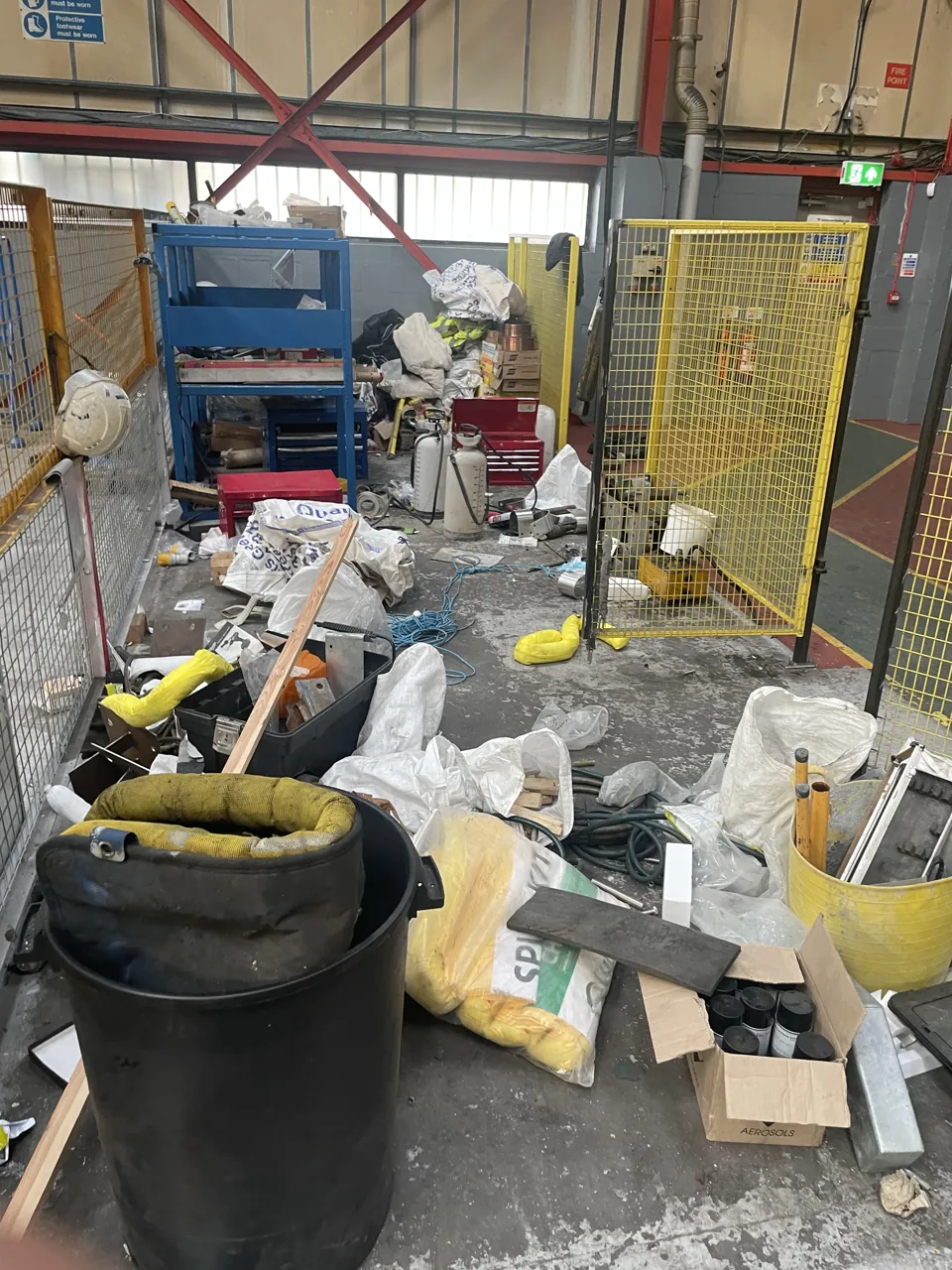
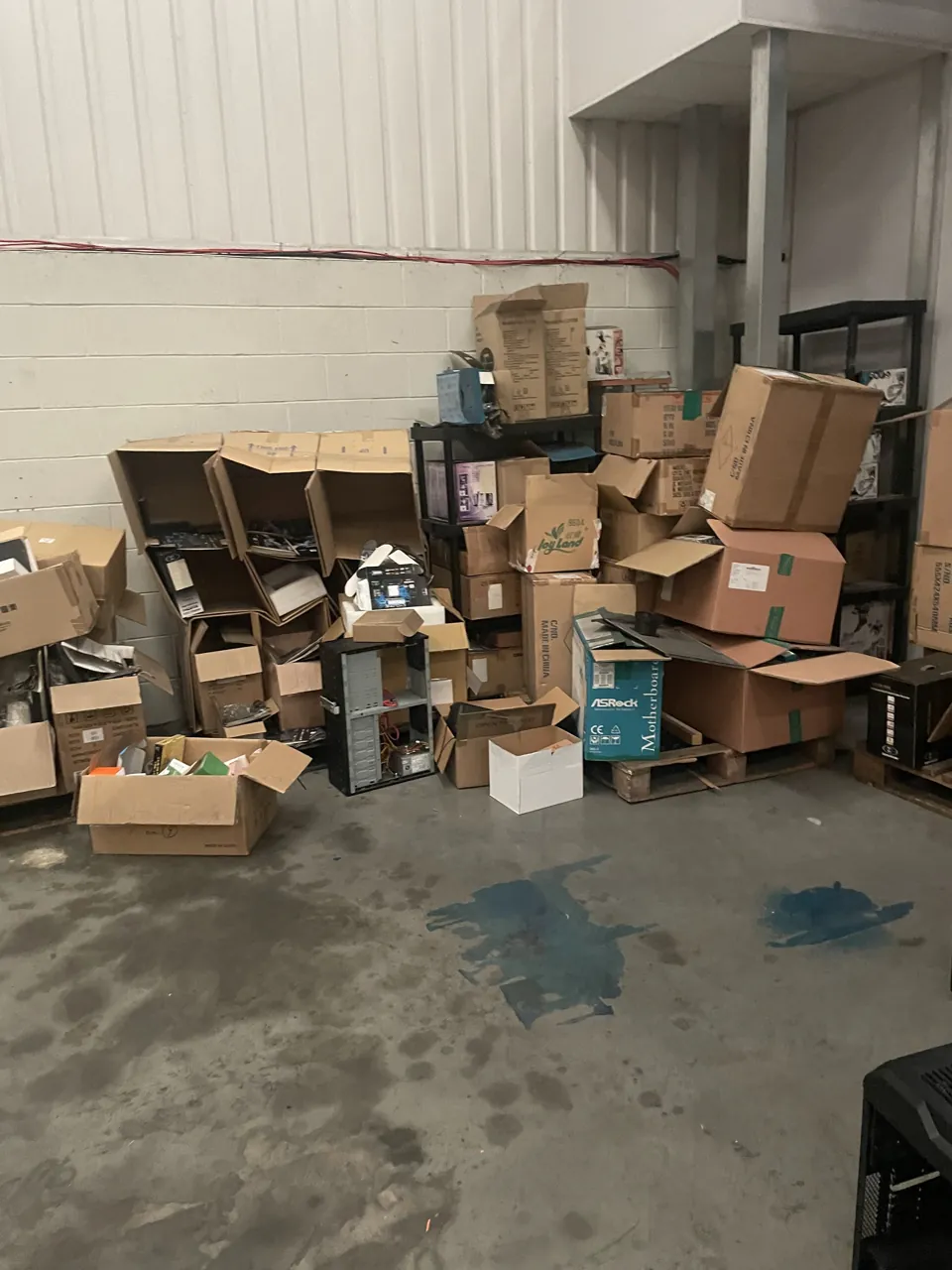


Bin rules
Under the Simpler Recycling reforms, all workplaces in England must separate dry recyclable materials, food waste, and non-recyclable waste before it is collected. The rules came into force on 31 March 2025. Micro-firms with fewer than 10 full-time equivalent employees have until 31 March 2027. The Environment Agency inspects workplaces, and collectors can refuse a collection or charge more when recycling is heavily contaminated.
Key criteria for comparing waste contractors
Licensed waste management and an unlicensed carrier may quote a similar price, but the liability is entirely different. Your duty of care as the waste producer requires that waste is transferred only to an authorised person, and that a written description of the waste goes with it. A registered carrier is an authorised person. DrClear issues a Waste Transfer Note on every clearance, giving you the documented record that duty of care asks for.
Unreliable suppliers drop scheduled pickups, leave full bins on kerbs, and fail to provide tracking data, which quickly compromises site hygiene through overdue trucks, inaccurate invoices, and missing duty of care notes. DrClear holds its own upper-tier registration (CBDU549477) and issues a Waste Transfer Note on every clearance.
Contract terms and pricing structures
Vague contracts conceal variable rate spikes, container rental surcharges, fuel fees, and auto-renewal lock-in clauses. Without close monitoring, excess weight charges also accumulate whenever rain soaks open containers. DrClear confirms the total price before work begins, with no undisclosed labour or disposal charges added on the day.
Health, safety, and regulatory compliance
Lorry drivers and site handlers encounter sharp metal, biohazards, and heavy bin weights during collection rounds. If your firm ignores Waste Industry Safety and Health (WISH) guidance, poorly serviced bin wheels, cracked lids, and broken brakes cause runaway equipment and staff injury.
Largest waste management companies in the UK
National operators run the largest collections across the UK alongside major regional independents. While national operators maintain widespread depot networks and extensive treatment assets, small businesses can experience slow customer support during route interruptions. Local independent haulers operate closer to regional routes, which helps them resolve emergency calls faster, but some lack in-house disposal plants.
5 Churchfields Rd, Wednesbury
- Booked for full clearance of a one bed flat and garden clearance (excessive weed growth). Was available very quickly after visiting to quote which helped us massively!
Clearance was done to a high standard and extremely quick! The 3 man crew were very … More polite and friendly
Would recommend to anyone needing their services


Waste Management from £275. The from-price is the starting figure for the smallest normal job of this type. The final price depends on volume, access, separately handled items and labour time.
Select the right provider for your business
Selecting a waste contract without site data leads to undersized bins, frequent collections, and unexpected charges. Visible signs of poor setup include open bin lids and invoices that exceed initial quotes. Committing to a multi-year deal without an audit locks in inflated baseline fees. For a booked collection on a date you choose, with a fixed price and a Waste Transfer Note, contact our team.